


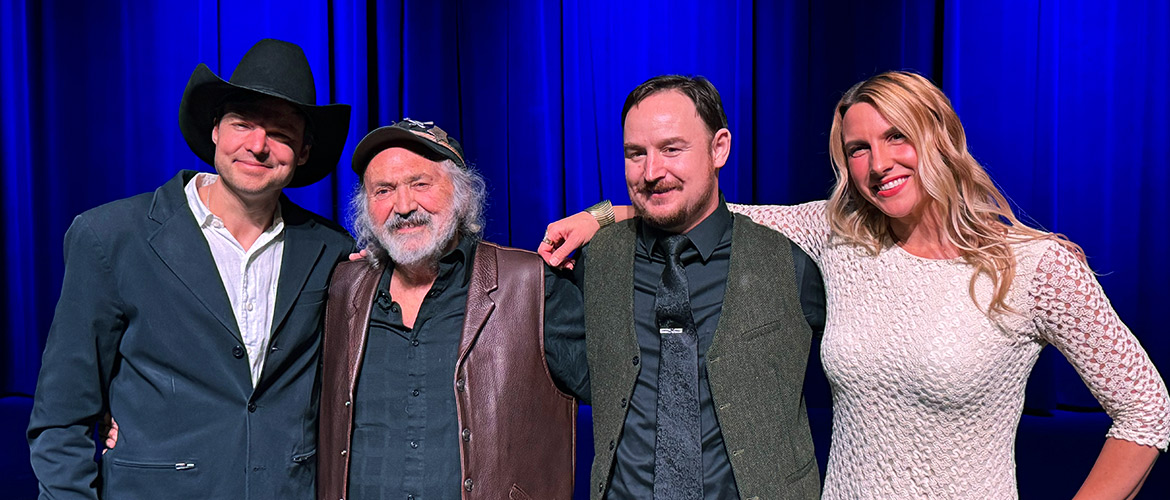
For about a dozen years, singer-songwriter Jason DeShaw has traveled to the farthest corners of his native Montana, sharing his mental health struggles to fight stigma, offer hope and encourage thousands of children and adults to seek help rather than suffer.
Mental health conditions require management, just like chronic physical illnesses, and bouts of depression still overcome DeShaw. One of those episodes struck as he was to perform a Nov. 12 sold-out show in recognition of World Mental Health Day to support the mental health awareness nonprofit NAMI Montana in partnership with Blue Cross and Blue Shield of Montana.
Instead of canceling the show, “An Evening with Jason DeShaw & Friends,” DeShaw took to the stage at Helena’s Myrna Loy. He candidly revealed what he was confronting and relied on the audience and the other artists to help get him through the show and spread his message.
“Depression is the hardest thing I’ve ever had to face,” says DeShaw as he recalled the experience. “It affects your mind, body and spirit. I leaned into my friends who joined me on stage,” he said. He also credited NAMI Montana Executive Director Matt Kuntz and BCBSMT leaders for their support. “I think they all have my back.”
That concert is among the ways BCBSMT, NAMI Montana and DeShaw have partnered to shine a light on and find solutions to the state’s mental health crisis. Montana has had the troubling distinction of having one of the five highest suicide rates in the nation for 30 years.
Kuntz, who joined NAMI almost 20 years ago, says BCBSMT’s commitment to helping the organization improve mental health awareness and access has been steadfast. Over the past five years, the company has provided more than $100,000 to support NAMI and additional grants to help DeShaw deliver his message.
Yet the effort that means most to Kuntz is BCBSMT’s collaboration with NAMI to help write and pass Montana’s 2017 Mental Health Parity Act.
“You can’t do something like that without a certain level of trust,” Kuntz says. “For Blue Cross and Blue Shield, that was dollars and cents going out the door to help increase access to mental health care across Montana. We really are on the same page.”
BCBSMT’s other initiatives have included an initiative to help fight opioid abuse, rising suicide rates and methamphetamine and heroin epidemics. The company also helped fund a new psychiatry residency to bring more mental health professionals to Montana, as well as state nonprofits through its Blue Impact grant program to help offer sustainable, measurable programs to improve Montanans’ health outcomes, including mental health.
“We believe that mental health is just as important as physical health, and that no one should have to face their struggles alone,” says BCBSMT President Lisa Kelley. “Jason DeShaw’s courage in sharing his story is helping to break down barriers of stigma and inspire hope across our state, especially in rural communities where support can be hard to find. We’re proud to partner with Jason and organizations like NAMI Montana to expand access to mental health care and ensure Montanans know that help is available, recovery is possible and they are not alone.”
Fighting for the people of Montana
With BCBSMT’s support, DeShaw is taking his Montana Mental Health Ag Initiative geared toward farmers across the state to share his story of hope and recovery set to the soundtrack of his life. A native of Plentywood in Northeastern Montana, DeShaw, 44, has repeatedly said he nearly succumbed to mental illness and addiction while on a 2010 Canadian tour.
Diagnosed with bipolar 1 and alcoholism, he’s been talking and singing about his struggle since 2014.
“Mental illness becomes less scary when we talk about it,” he says. “It’s been really amazing to have the support of Blue Cross and Blue Shield to reach people who need to hear it the most.”
Research by Montana State University shows DeShaw’s performances resonate with his audiences. A 2019 study based on four rural high school visits found DeShaw’s performances reduced stigma and raised students’ willingness to seek help.
Kevin Wysocki, president of the nonprofit Realize Hope, which handles the tours, says DeShaw’s raw and honest message helps release the pain kids have learned to contain. Dozens of students often seek help from school staff after hearing his message.
“It definitely hits them,” Wysocki says. “The difference about Jason’s performances is he lives what he’s sharing. He knows everything about it.”
DeShaw’s ag initiative similarly has affected older audiences that have spent their lives building and protecting facades of mental toughness.
“I notice them tearing up or they come up afterward and say they needed to hear there was hope,” DeShaw says. “When you state with confidence that we, too, have struggled, that’s how you hit those heart strings.
“I’m fighting every day for the people of Montana,” he says. “When you get a message that you saved someone’s life, it kind of keeps you going.”