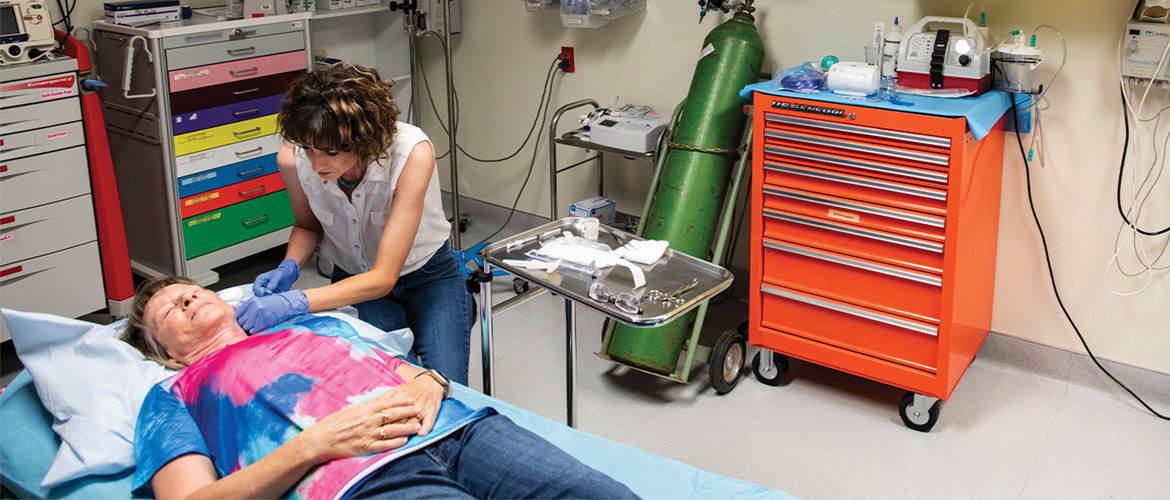
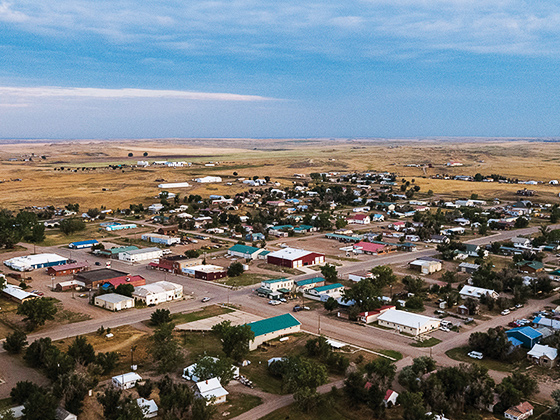
In Montana, nurse practitioners are the sole health care experts in many rural communities. Despite lack of specialized training, they provide emergency care until patients can be transported to large medical centers for treatment.
Leaders at Montana State University’s Mark and Robyn Jones College of Nursing want to better prepare their advanced practice registered nurse graduates — nurse practitioners — for such stressful medical situations. With funding support from Blue Cross and Blue Shield of Montana, the nursing school is developing a post-graduate, transition-to-practice program to improve NP confidence, competence and retention.
“We want to make sure they can stand alone a little more confidently,” says Marg Hammersla, graduate department head and assistant professor of nursing. “What do they wish they had had a bit more experience doing during their training to prepare them for practice in Montana’s rural communities?”
BCBSMT awarded the school a $43,685 grant as part of its Blue Impact℠ program targeting social and economic factors that influence health — including by strengthening Montana’s rural health care systems. In 2025, the company provided more than $470,000 in Blue Impact grants to 14 nonprofits statewide.
“We are deeply committed to improving the health and wellness of all Montanans by supporting the meaningful work of our community partners," says BCBSMT President Lisa Kelley. “We invest in efforts that improve health outcomes, expand access to care and strengthen communities throughout Montana.”
The Blue Impact grant is among the ways BCBSMT has supported the nursing school’s efforts to educate students, as well as provide care in underserved communities. In 2024, for example, BCBSMT and the Caring Foundation of Montana worked with the college to help tribal communities meet federal Head Start program requirements while addressing child health needs. More than 600 nursing students helped provide medical and dental care for children of the Flathead Nation, Northern Cheyenne, Blackfeet and Crow nations.
“Montana State University is an incredible partner to all Montanans,” says Jesse Zentz, BCBSMT community relations manager. “We are grateful to partner with the College of Nursing to help provide invaluable resources and services.”
With its latest Blue Impact grant, the nursing college is collaborating with rural health care providers and clinics to assess community needs and develop best practices for a post-graduate transition-to-practice program for nurse practitioners and nurse midwives in rural areas.
“Montana’s nurses and advanced practice registered nurses are the lifelines in their rural, frontier and tribal communities — often the first and only point of care when minutes may truly matter,” says Sarah Shannon, dean of the nursing college. “Through the Blue Impact partnership, we can better understand their unique needs and design a transition-to-practice program that prepares APRNs to deliver confident, high-quality and life-saving care where it’s needed most.”