The Care Van® program is working with local organizations across Montana to creatively combine resources and ensure people are receiving food, education and other basic health needs regardless of their ability to pay.
Since 2014, the Care Van team has traveled more than 200,000 miles to help provide access to immunizations, health screenings, educational resources and preventive services to Montanans in rural areas. The program is operated by The Caring Foundation of Montana®, which is administered by Blue Cross and Blue Shield of Montana as an in-kind donation.
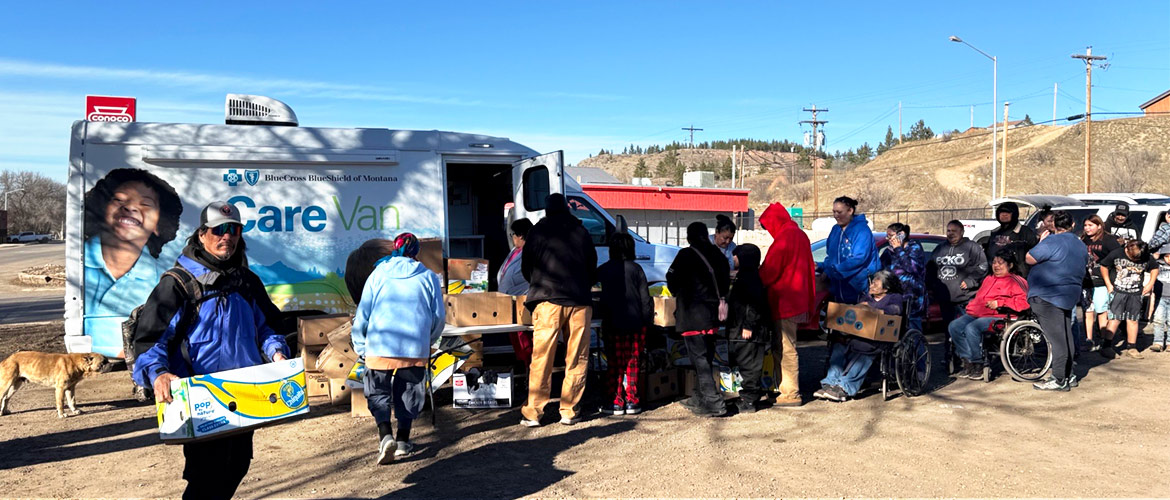
More recently, the Care Van program has successfully embraced “out-of-the-box” ideas that utilize the mobility and capacity of the program’s two Care Vans to deliver food, clothing and other basic resources to tribal areas and rural communities, says program administrator Bryan Haines.
“Our belief is that we’re always willing to try something new and work with partners to meet them where they’re at,” says Haines. “Whether that’s health care or access to services and goods, we listen to what’s needed in communities.”
Through a partnership with Missoula-based Essential Eats, for example, the Care Van program uses one of its vehicles to help transport and distribute food and other necessities to communities. The nonprofit works with local stores and other suppliers to distribute food, clothing, bikes, school supplies and other items to tribal areas.
In 2025, the Care Van program and Essential Eats made five deliveries impacting 725 people at the Rocky’s Boy, Northern Cheyenne, and Fort Belknap Indian Reservations. This year, they’ve already completed eight deliveries.
“Partnerships like this are what make real change possible,” says Sara Wecker, Essential Eats Distributing board chair. “When organizations come together with a shared purpose, we don’t just move supplies — we move hope, dignity, and care to families in extremely remote and isolated communities.”
The Care Vans also help deliver essential items to areas in need during crises, including bringing water to communities affected by drinking water emergencies and delivering food packs through a partnership with the Montana Food Bank Network.
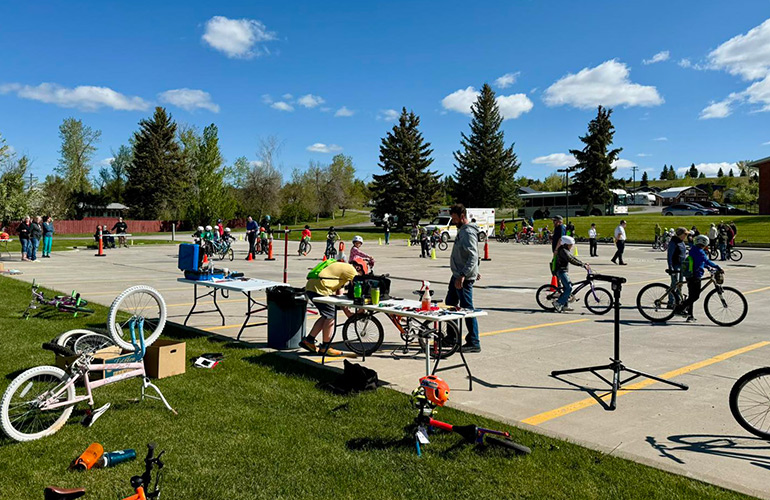
And through coordination with the Montana Department of Transportation, the vans offer health screenings and educational information at bike rodeos across the state. MDT collaborates with local law enforcement, hospitals, and others to provide bike safety, helmets, raffle off bikes and offer basic bike maintenance to children at bike rodeos set up in local parking lots. In 2025, Care Vans helped at bike rodeos in Helena, Choteau, and Dillon.
Expanding access
Many communities throughout the state lack access to basic dental care or must drive hours to their nearest dentist.
Through the Care Van’s longstanding work with Smiles Across Montana, the program helped at 11 events last year, supporting services for 400 individuals, including providing no-cost cleanings and dental sealants.
In Hill County, the program is working with the local health department to test and treat inmates for sexually transmitted infections at Hill County Detention Center and ultimately help cut down on the number of STIs in the greater Montana community.
Montana has the fourth highest rate of syphilis, including a 559% increase between 2019 and 2023, and many inmates don’t have insurance and lack access to health care services, says Hill County Nurse Chrissy Kirsch.
With the financial support of the Care Van program, Kirsch travels to the detention center every other month to screen inmates for syphilis, HIV, HCV, chlamydia, and gonorrhea, and provide treatment if needed. Last year, 86 people were screened and 15 people tested positive and received treatment.
“In this part of the country we have to rely on creative solutions to solve problems in new ways,” Kirsch says of the partnership with the Care Van program. “These people deserve public health treatment, and we try to meet people where they’re at with consistency and hope we reach them. It’s my little way to fight for equity.”